Why do migratory birds come to India?
How do migratory birds travel thousands of kilometers with the sun and stars as their guides? Why is India the only destination?
Hello! Today in Morning Explainer, we’ll talk about migratory birds. These birds leave their homes every year and travel thousands of kilometers to reach India. But why and how?
“While packing my things, I’m wondering where do
those who don’t belong anywhere go…”
You all must have understood its meaning. But today, the lion’s share is not on humans, but on migratory birds, who leave their cities every year to settle in India. The struggle to survive can be learned from these exotic birds, because in winter, they have neither their homes nor food to eat. In
why migratory birds leave their homes in winter, how they travel thousands of kilometers, and why they come to India…
Question 1: When and where do migratory birds come to India?
Answer: Every year, precisely in September , millions of birds leave their original homes and embark on a long journey. These birds come to India just as we migrate to the mountains in the summer. They mostly come from remote areas of Siberia , such as the Yamal Peninsula , Lake Taimyr , the Lena River region, Yakutia , and Chukotka .
Some come from Arctic Russia, some from Mongolia and the Tibetan Plateau of China , some from the vast steppes of Kazakhstan , and some even from Scandinavia , including Norway , Sweden , and Finland . They gradually arrive in India from the first week of September to the end of November.
The first to arrive are small birds that fly quickly, such as the Amur Falcon and Rosy Starling . Then come ducks, geese , and flamingos in October . Last to arrive in November are the Siberian Crane and Bar- headed Goose .
There are two main routes for these birds to come to India…
- Entering Punjab, Haryana and Rajasthan via Pakistan over the Hindukush and Karakoram mountains.
- This is the most difficult route to cross the Himalayas directly.
The world’s highest-flying bird, the bar -headed goose, flies over Mount Everest and enters India via Nepal and Uttarakhand. It flies at altitudes of 8,000-9,000 meters, where oxygen levels are very low, but its blood and lungs are so special that it manages to do so.

The largest numbers of ducks are the Northern Pintail , Northern Shoveler , Gadwall , and Common Teal . Their numbers reach 5-6 million each year. Flamingos number 5-6 million. Siberian Cranes are now very rare, with only 50-70 of them visiting annually.
Question 2: How do migratory birds travel thousands of kilometers?
Answer: Now, let’s explore the real magic. The magic that even scientists are amazed at: how these birds, without a map , without GPS , without the internet, manage to cover 10,000-15,000 kilometers without deviating even an inch .
First, these small birds fly at night, while larger birds like geese , cranes , and flamingos fly both day and night. They fly continuously for 10-12 hours at a time, then rest for 2-3 days at a lake or field, fill their stomachs, and then take off again. Thus, they complete the entire journey in 6-8 steps …
- Now, coming to the magic, the first is the compass hidden in their eyes and brain . Their brains and beaks contain a special crystal called magnetite . It senses the Earth’s magnetic field just like our compass needle points north. Scientists have experimentally proven that if a simulated magnetic field is created above them, they start flying in the opposite direction. This means that nature has embedded a real compass inside them.
- The second magic is the sun. When they fly during the day, they see the sun and know where to head southwest. Even when clouds cover the sky, their eyes contain a special protein that can see the sun’s ultraviolet rays even behind clouds. This means that whether it’s clouds or fog, the sun cannot hide from them.
- The third and most astonishing magic is at night, when they fly by looking at the stars. A part of their brain called the hippocampus remembers the star map. Scientists conducted an experiment in a planetarium ; when the star map was rotated, the birds also began to fly in the same direction. This means that a map of the entire sky is written in their brains.
- The fourth magic is the wind. These winds, which blow in different directions at high altitudes, are called jet streams . These birds first climb high, catch the right wind direction, and then glide for hundreds of kilometers without flapping their wings. This is what makes their long flights possible.
- The fifth magic is memory . Birds that have traveled a route once, remember the same route, the same lakes, and the same fields the next year. Satellite tracking has revealed that the bar- headed goose crosses the Himalayas through the same mountain pass every year, without deviating even a meter.
The most surprising thing is that babies who are flying for the first time can reach the right place even without their parents. This means that all this information is already written in their DNA .
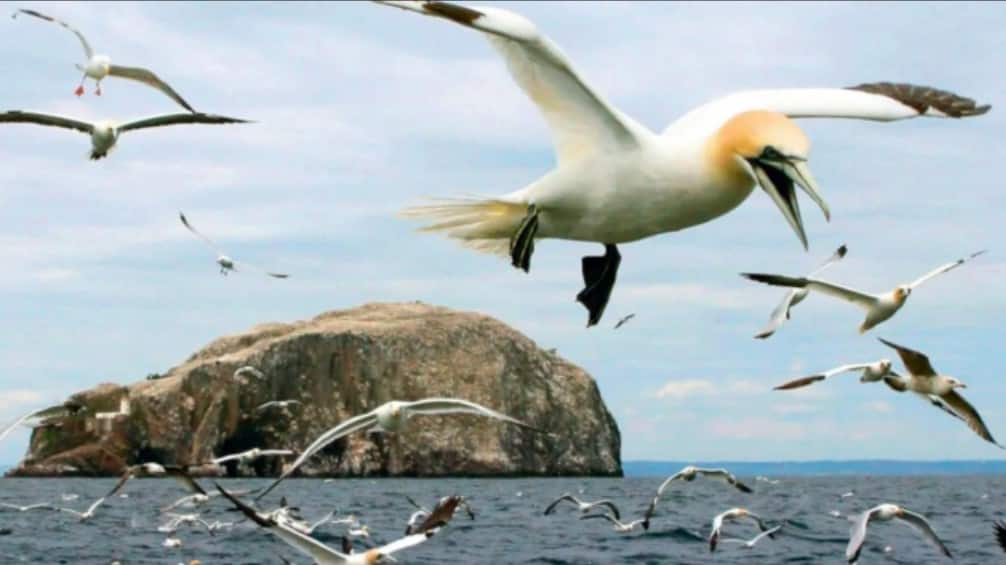
Question 3: These birds could fly anywhere in the world, so why do they come to India?
Answer: There are four major reasons for this…
- Winter Resort : While Siberia in the north experiences temperatures as low as -50 degrees Celsius, blanketing the land with snow , India experiences a mild winter at the same time. The sun shines brightly, and the most important commodity, water, is never-ending. Thousands of lakes, rivers, marshes, beaches, rice paddies, and fishponds abound here.
- The Himalayas offer refuge : The Himalayas are the world’s tallest wall, blocking the fiercely cold winds from the north. This might remind you of the Northern Wall from ” Game of Thrones .” Similarly, the north faces blizzards, while the south offers mild cold and abundant water. Therefore, India is a perfect safe zone for them.
- An ancient connection : Siberian cranes have been visiting India for over 10,000 years. This place is written in these birds’ DNA . Just as your village is in your blood, their children’s DNA also dictates that they must go to India come winter.
- There’s no other way : Many ancient habitats around the world have disappeared. These birds once inhabited the vast swamps of Iran, Iraq , and the Middle East , but these swamps have dried up, leading to increased hunting. India is the last major country left with millions of hectares of wetlands , and people love these birds. They visit them and protect them.
Question 4: How long and where do these birds stay in India?
Answer: These visitors first arrive in the first half of September and depart by the end of April. This means they stay with us for about 7-8 months. However, each bird has its own time and preferred habitat…
- Team 1 : Flamingos stop in the mountains of Nagaland and Manipur in October and November in such large numbers that the entire sky turns dark. They rest there for 10-15 days, then move on to South India and then Africa . Around this time , flamingos begin arriving in the Rann of Kutch in Gujarat and remain there until March-April. By December 1, 2025, approximately 100,000 flamingos had reached Kutch.
- Team 2 : Dispersed around large freshwater lakes: Harike Pattan Wetlands in Punjab and Haryana; Sandi , Nawabganj , Lakhaboshi , and Saman Sanctuaries in Uttar Pradesh ; Sambhar Lake and Keoladeo Bharatpur in Rajasthan ; Chilika Lake in Odisha ; Kolleru Lake in Andhra Pradesh ; Deepor Beel and Kaziranga Plains in Assam .
The Rann of Kutch and the Naliya Grasslands in Gujarat are also popular destinations. Overall, the birds nest in several states, including Rajasthan, Gujarat, Tamil Nadu , Goa, Assam, Maharashtra, and Punjab.
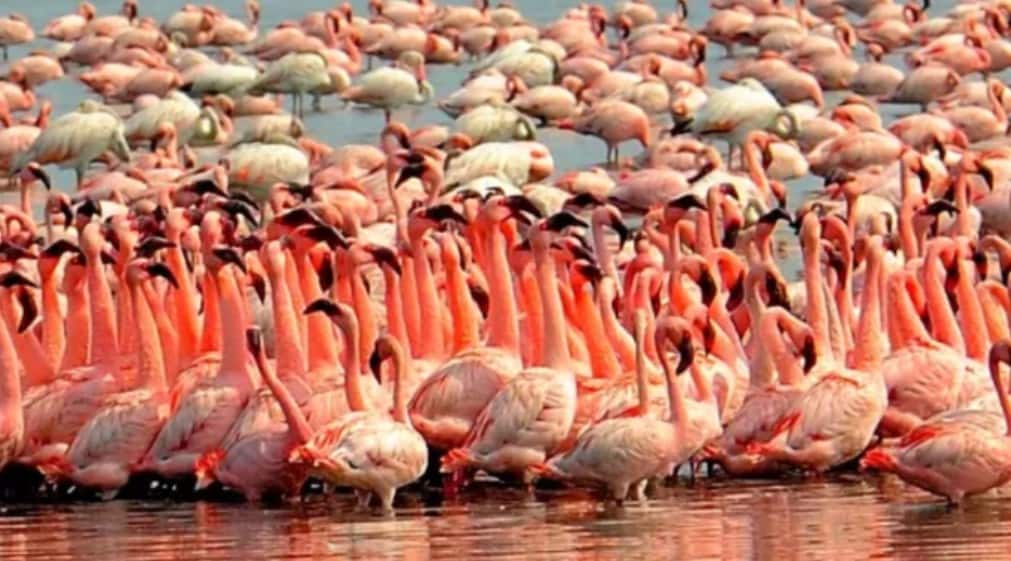
Question 5: So why and how do migratory birds leave India?
Answer: From the end of February, they gradually begin preparing for their return. First come the small birds, then the ducks and geese in March, then the flamingos in the first week of April , and finally the bar- headed goose . By mid-April, the sky is empty again.
In fact, by March, the snow begins to melt in northern Siberia , the Arctic , and Tibet . In May and June, daylight hours become 24-hour, meaning the sun never sets. Insects emerge in their billions. Lakes open up, and grass sprouts. The entire area comes alive. This is where these birds raise their young.
They came to India only to spend the winter, but their true home is where their young are born, where their species has lived for thousands of years. If they stayed in India, the water would dry up in the scorching 45-degree heat, and their young would not be born.