Aravalli’s existence threatened !!!!!
Aravalli’s existence threatened: Delhi’s invisible sentinel’s security breached, threatening the city’s air, water, and future
The future of the Aravalli Range has become increasingly uncertain following the Supreme Court’s decision on November 20, 2025. This decision could exclude 91.3% of the Aravalli Range from legal protection. Environmental experts believe this decision not only alters the geographical boundaries but also could push Delhi-NCR towards pollution, water scarcity, and desertification. Consequently, the destruction of the Aravalli Range has become a matter directly linked to the health and future of millions of people.
Delhi’s Green Shield
The Aravalli range stretches 692 kilometers from Gujarat to Delhi, passing through Rajasthan, Haryana, and Delhi. It influences the southwest monsoon, bringing rainfall to eastern Rajasthan and blocking the spread of sand and dust from the Thar Desert from the west. It has three parts: the Southern Aravalli, which extends up to 450 meters, the Middle Aravalli, which reaches 500-700 meters, and the lower-altitude Northern Aravalli surrounding Delhi. Tiger reserves like Ranthambore and Sariska are located here, which are biodiversity hotspots. The Aravalli range acts as a natural green shield for Delhi-NCR, absorbing PM 2.5 particles and preventing dust storms.
The northern extension of the Aravalli Range in Delhi, known as the Delhi Ridge, forms the basis of the capital’s biodiversity.
The Aravalli Range in Delhi originates in the Tughlakabad area of South Delhi, home to the Asola Bhatti Wildlife Sanctuary and Bhatti Mines. From there, it extends northwestward, passing through Vasant Kunj, Vasant Vihar, JNU, and Mehrauli. It then forms the Central Ridge, extending from Dhaula Kuan to Sadar Bazaar, and finally, as the Northern Ridge, traverses the Delhi University area, ending near Wazirabad on the western bank of the Yamuna River. The Delhi Ridge is approximately 35 kilometers long and covers an area of approximately 8,000 hectares. This quartzite mountain range is an important supporter of Delhi’s biodiversity and has been protected as an eco-sensitive zone by the Ministry of Environment, the Delhi Government, and the Supreme Court.
Why is the new definition dangerous?
On November 20, 2025, the Supreme Court accepted the recommendation of the Environment Ministry’s committee and established a new definition of Aravalli. Consequently, only those landforms that are 100 meters or higher above the surrounding land will be considered Aravalli. This will not be considered above sea level. A range will be defined if two hills are within a 500-meter radius. Previously, the Forest Survey of India (FSI) used a 3-degree slope as the basis for determining the definition. According to environmental experts, with the connivance of the alleged system, mining operations are carried out by those who obtain government permission by showing hills 100 meters or higher as 60 or 80 meters. They use altimeters to measure the hills, despite the government’s repeated assertion that the height of a mountain cannot be measured using an altimeter.
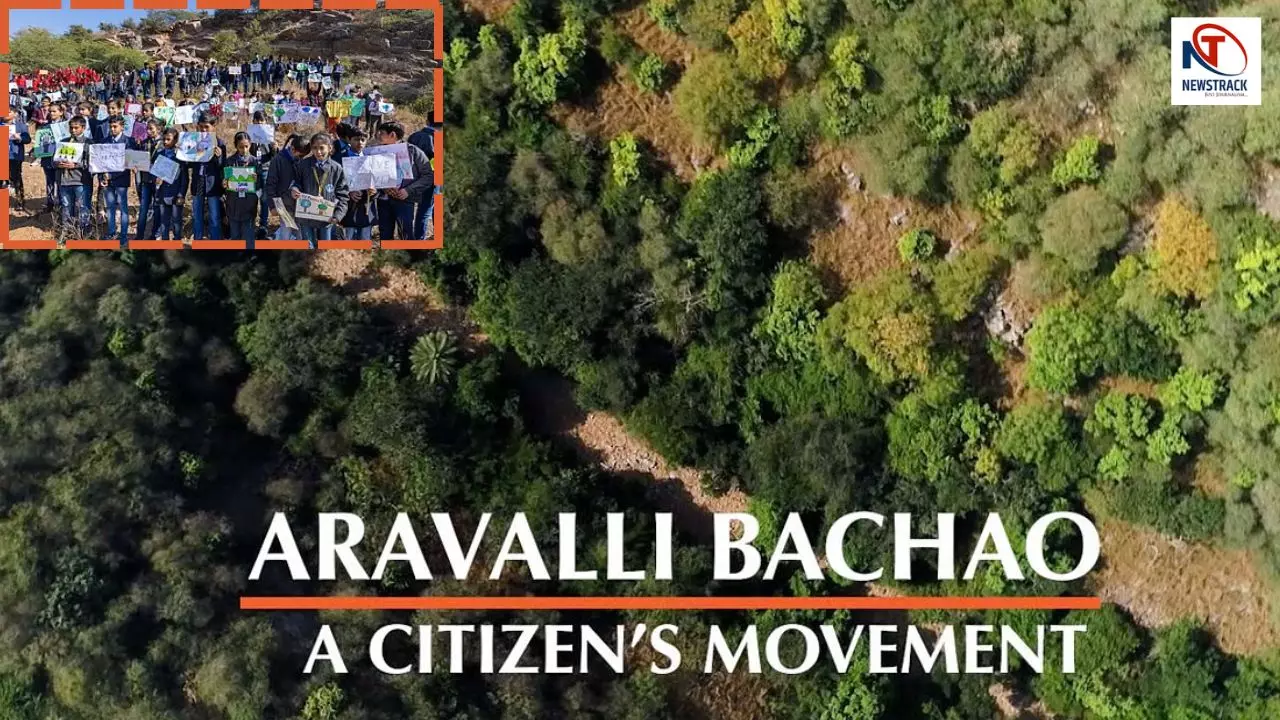
Activists have launched a campaign on social media called “Save the Aravalli” and questioned the government’s policy. Users have objected to the proposed new definition of the Aravalli. They stated that the Aravalli should be viewed not only in terms of height or technical parameters, but also in terms of its environmental importance. Many users even changed their social media profile pictures in support of the #SaveAravalli campaign, calling it a symbolic protest against the new definition. The Aravalli mountain range is one of the world’s oldest fold mountain ranges, formed primarily during the Proterozoic era ,
According to the Rajasthan Tourism Department, the Archaeological Survey of India, and academic studies, the Aravalli mountain range is primarily of geological importance, but it is also rich in religious and cultural perspectives. It is home to numerous ancient temples, pilgrimage sites, and sacred groves associated with Hindu, Jain, and tribal traditions. While its direct mention in major texts such as the Vedas or the Mahabharata is rare, some legends link it to Hanuman’s journey in the Ramayana.
- Dilwara Jain Temples (Mount Abu, Rajasthan)
- Chaleshwar Mahadev Temple (Mount Abu)
- Ambaji Temple (Gujarat)