A time of great crisis for the Grand Alliance, a question mark over its future.?
A time of great crisis for the Grand Alliance, a question mark over its future.
His absence from Bihar for almost two months after the Vote Adhikar Yatra also raised questions. The assembly election results show that the people’s court has rejected the allegation of vote theft. The crushing defeat of the Grand Alliance even after 20 years of Nitish’s rule is not only a blow to its morale but will also put a question mark on its future. RJD, which emerged as the largest party last time, has reduced its size to less than half this time, while LJP (R), which has a predominantly Dalit support base, has become a bigger party than the Congress. It is clear that this is a time of great crisis for the Grand Alliance.
- Weakness of Congress, lack of coordination in the grand alliance
- NDA’s strategy, fear of ‘jungle raj’
- The future of the grand alliance is in jeopardy.
the Grand Alliance lagged behind the NDA in the race for power in the last Bihar Assembly elections by less than one percent of the vote and 15 seats, the Congress was blamed for the defeat. Of the 70 seats it contested, Congress won only 19. The Left parties performed even better. This time, Congress proved to be an even weaker link. A formal seat-sharing arrangement between the RJD and Congress failed until the very end. As a result, more than ten seats saw friendly contests, but the huge difference in vote percentage and seats between the Grand Alliance and the NDA suggests that instead of learning from the past, more mistakes were made.
Coalition politics requires finding a balance and coordination between party interests. Because the NDA was able to achieve this despite numerous speculations of checkmate, the electoral wave was marked by a “pro-incumbency” rather than an “anti-incumbency” sentiment. After narrowly losing the race for power in the last election, the Grand Alliance engaged in internal squabbles instead of the groundwork it should have. This could have been resolved through improved social alignment, but nothing significant was achieved in this direction.
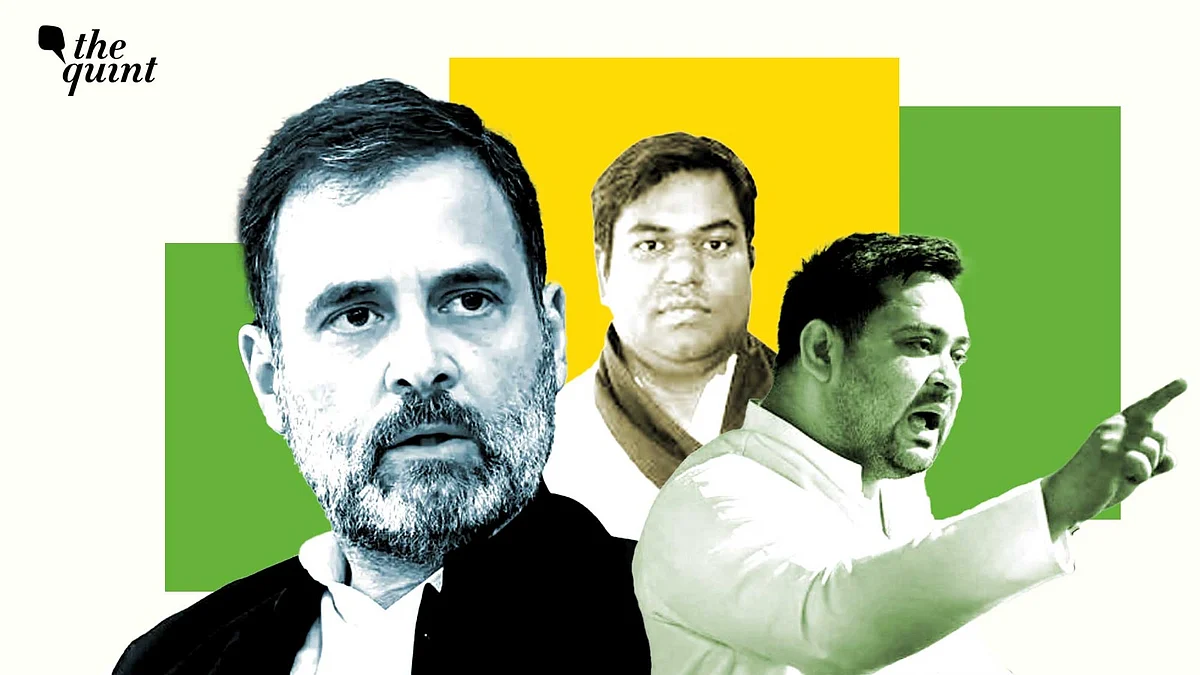
The way Mukesh Sahni, who won only 15 seats, was declared the Deputy Chief Ministerial face, caused electoral losses to the Grand Alliance. Not only were the leaders and supporters of the Congress, which was contesting on 61 seats, upset, but Muslims and Dalits, who played a decisive role in many seats, were also disappointed. The way RJD, which contested on 143 seats, fielded 52 or about 36 percent Yadav candidates, sent a negative message to other OBC castes, especially EBCs. RJD, which has a predominantly Yadav-Muslim support base, could have tried to increase its and the Grand Alliance’s support base by giving more tickets to other communities.
Through its alliance and seat-sharing, the NDA succeeded in conveying a message of representation for all sections of society, but the Grand Alliance failed to do so. Tejashwi Yadav failed to shake off the burden of Jungle Raj, and by raising the specter of its recurrence, the NDA once again won. From the NDA platform, the Lalu family was also called the “Mahabhrashta” (corrupt) family, as almost the entire family is facing legal scrutiny for corruption. While many issues play a role in elections, law and order and corruption are issues that directly impact the public. Therefore, voters generally remain uncompromising on these issues.
Tejaswi Yadav, who was the Deputy Chief Minister, took credit for the jobs given during the Mahagathbandhan government and assumed that he would become the choice of the youth, but naturally he could not deprive the Chief Minister of that credit. Congress wanted to emphasize on the tried and tested ‘guarantee card’ of Karnataka, Telangana and Himachal, but Tejaswi kept singing the song ‘Raag-Naukri’. State-by-state freebies are proving to be decisive in electoral politics. Nitish too made several populist announcements just before the elections, including transferring Rs 10,000 each to the bank accounts of more than 1.25 crore women.
Tejashwi also made populist promises, but Nitish, who had a better track record, prevailed. People preferred to trust the current government rather than a government that “could be formed.” Furthermore, Tejashwi failed to fully explain his blueprint for fulfilling his promises. Following the NDA’s example, Tejashwi expanded the Grand Alliance but failed to present a united image. He focused more on projecting himself by naming the Grand Alliance’s manifesto “Tejaswi Prana.” He was the natural chief ministerial face of the Grand Alliance, but the delay in Congress’s approval had a negative impact.
In fact, the two major parties of the Grand Alliance, RJD and Congress, appeared more in competition with each other during the election campaign than united. Rahul Gandhi had announced a ten-point agenda focusing on EBCs to increase his support base, but this did not receive much attention in Tejashwi’s manifesto. From seat sharing to manifesto and election issues, the Grand Alliance appeared confused this time. Bihar did not suddenly become a poor state. Migration did not begin during Nitish Kumar’s rule. The fact that Jungle Raj remains an election issue even today clearly indicates that conditions have improved over the past 20 years. Despite this, these could have become serious election issues, but Rahul Gandhi, on behalf of the Grand Alliance, instead focused on vote theft.
His absence from Bihar for almost two months after the Vote Adhikar Yatra also raised questions. The assembly election results show that the people’s court has rejected the allegation of vote theft. The crushing defeat of the Grand Alliance even after 20 years of Nitish’s rule is not only a blow to its morale but will also put a question mark on its future. RJD, which emerged as the largest party last time, has reduced its size to less than half this time, while LJP (R), which has a predominantly Dalit support base, has become a bigger party than the Congress. It is clear that this is a time of great crisis for the Grand Alliance.