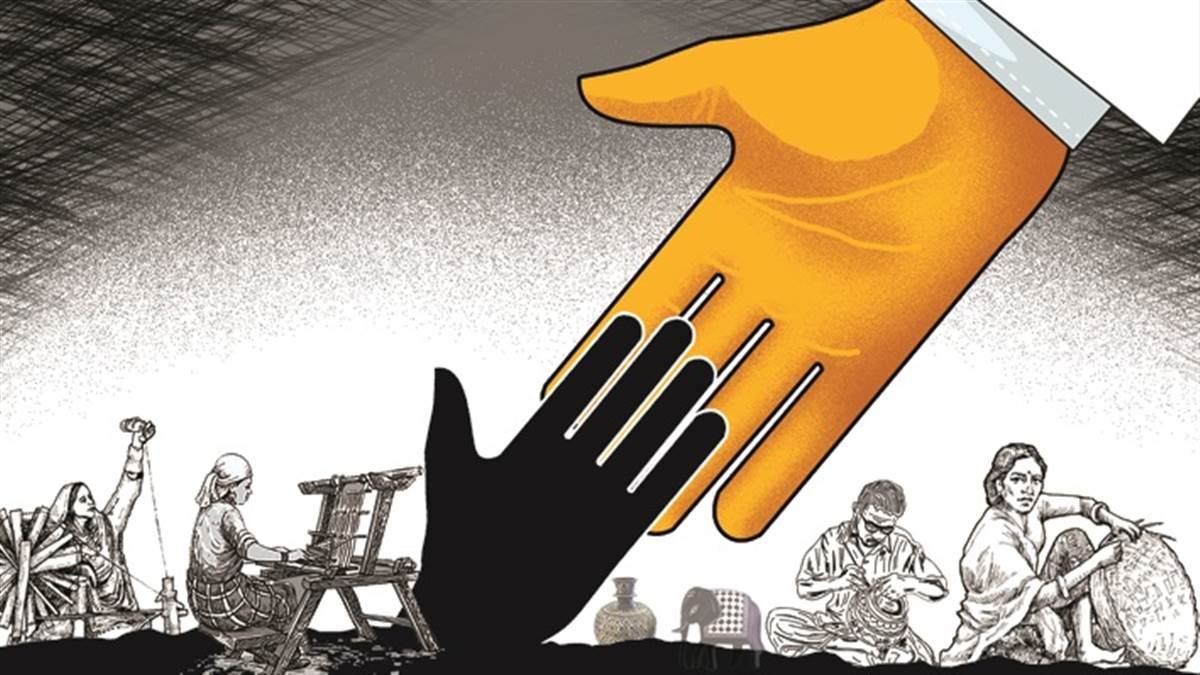
The government should take care of small exporters !!!
The government should take care of small exporters, so that the e-commerce export journey does not become a story of digital dependence.
The article states that India’s export ecosystem is at a critical juncture, with over 60 million MSMEs using e-commerce exports to access global markets. A new warehouse-based export model could turn small sellers into domestic suppliers, reducing their control over pricing and reducing profits. The article emphasizes the need to balance these with policies based on self-reliance, value addition, and digital empowerment.
- Indian MSMEs reach global markets through e-commerce exports
- The warehouse model can make small vendors into suppliers
- The need to focus on digital empowerment and self-reliance
…..India today stands at a critical juncture in its export ecosystem. The country’s more than 60 million micro, small, and medium-sized enterprises (MSMEs) form the backbone of the world’s largest artisan, craftsman, and small entrepreneurial community. These small entrepreneurs, handloom weavers, and handicraft artists have found a new and effective way to reach global markets through e-commerce exports.
International online platforms have enabled small Indian sellers to reach consumers in over 200 countries worldwide without the need for an overseas office. The digital marketplace and India’s innovative, cost-effective production system have expanded opportunities for small Indian sellers in global trade. Over the past decade, the e-commerce-based direct-to-consumer model has significantly empowered India’s small producers.
In this model, products are shipped directly from India upon receipt of orders from overseas customers, reducing entry costs and enabling even home-based entrepreneurs to start international businesses. Global demand for India’s handicrafts, textiles, jewelry, natural and traditional products is growing. This model has become a source of income and recognition, especially for small enterprises, despite the challenges they face in dealing with customs, payment settlements, and taxes.
Now, a new change is about to impact this entire ecosystem. Major global e-commerce companies want to allow a warehouse-based export model from India, where Indian sellers would store goods in marketplaces’ domestic warehouses, and the marketplaces would then export these products and sell them abroad.
These changes will transform the role of Indian sellers. They will no longer be exporters, but merely domestic suppliers. As exporters, the marketplace will have complete control over pricing, inventory, overseas distribution, and forex receipts. While this model is already being adopted in countries like China, Vietnam, and Malaysia, its deep and long-term implications in the Indian context are concerning.
The warehouse model could rob small sellers of pricing control, as marketplaces can exert pressure on prices by knowing the cost structures of all suppliers. This would turn small sellers into “price-takers” and significantly reduce their profit margins. Marketplaces could retain the entire retail margin earned in the foreign market, while Indian sellers would receive only the wholesale rate, which represents a small portion of the final selling price.
This model also has the potential to reduce India’s actual export value. Today, when an Indian seller sells a carpet abroad for ₹2,000 directly, the full ₹2,000 is recorded in India’s forex. However, in the warehouse model, the same carpet would be purchased by the marketplace for ₹1,100–₹1,200, and this amount would be recorded as India’s export value.
This will not only reduce India’s official export values, but in many cases, marketplaces may also remit profits abroad through their overseas subsidiaries, reducing India’s tax base. As marketplaces purchase on a large scale at low rates, profits for millions of artisans could decline. This reduced profitability could lead many entrepreneurs to compromise on quality, damaging India’s global brand reputation. When exports are done in the name of marketplaces, Indian products may lose their identity and uniqueness.
India’s trade and MSME policy has long been based on self-reliance, value addition, and digital empowerment. Initiatives such as One District One Product, Make in India, Digital India, Skill India, and the Foreign Trade Policy are working to directly connect small entrepreneurs with the global market.
In this context, the warehouse model is also contrary to the objective of democratizing digital markets. India needs to strike a balance in policymaking, but not at the cost of sacrificing the autonomy and identity of small exporters. India could develop neutral e-commerce export hubs under a PPP model, which would aggregate MSME products and facilitate exports, while retaining the exporters.
The warehouse model appears convenient on the surface, but it could weaken India’s grassroots export infrastructure and turn millions of entrepreneurs into mere suppliers. India’s e-commerce export journey has so far been a story of digital inclusion, women’s empowerment, and creative entrepreneurship. Ensuring that it doesn’t become a story of digital dependency should be our priority.
India needs a robust and value-sharing digital export ecosystem, not a foreign platform-dominated warehouse model. Protecting small exporters is not a sign of protectionism, but rather the economic foresight necessary for a self-reliant, inclusive, and value-focused export future.
In the digital age, data and platform control are as important as physical trade infrastructure. India must ensure that the autonomy of small producers is protected, price transparency is maintained, and export profits are recorded in India.