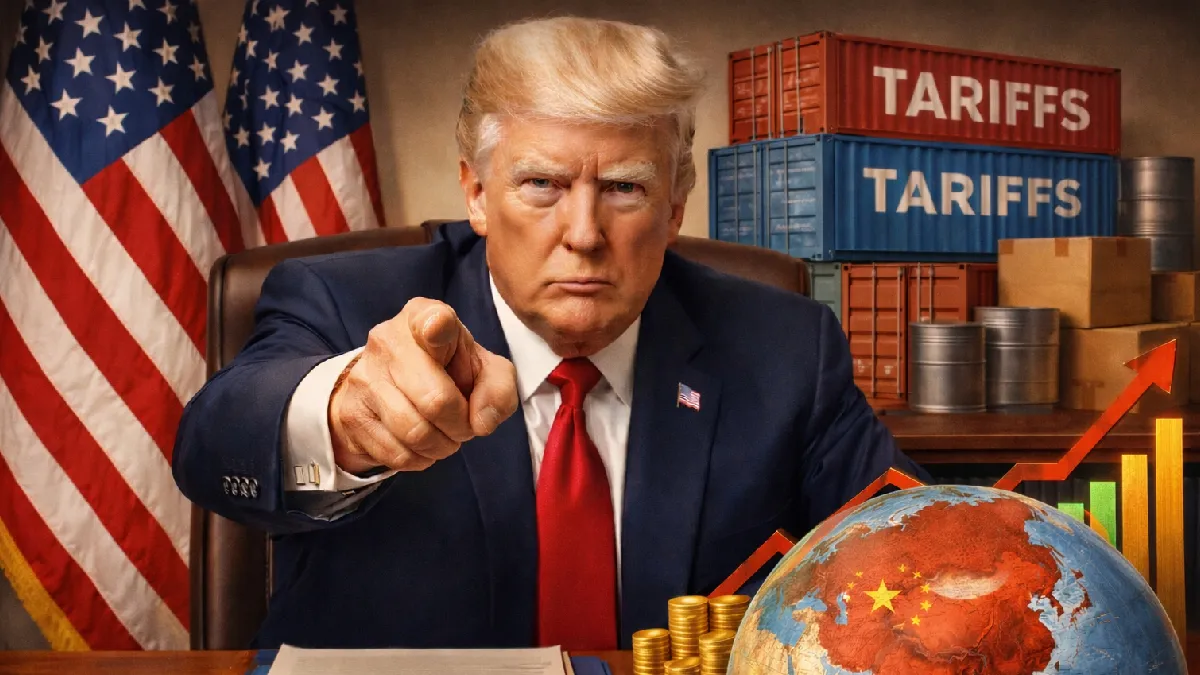
“Let the world unite against ‘gangster imperialism’ !!!
Trump’s transaction-based, sphere-of-influence geopolitical and global economic thinking is not as haphazard as it appears on the surface. A closer look reveals clear patterns behind his thinking. This is evident in his attempts to kidnap Maduro and install a puppet government in Venezuela to gain control of its oil reserves.
At the heart of Trump’s “Donro Doctrine” is the belief that the United States can do whatever it wants with impunity in its self-proclaimed “backyard.” This sends a signal to the world that other superpowers—notably China—can also do the same in their own territory. The United States also reserves the right to advance its strategic interests wherever it chooses—including in Greenland.
This approach by Trump has been aptly described by Indian economist Prabhat Patnaik as “gangster imperialism.” It harks back to capitalism’s colonial roots, when relations between people and states were determined by their power. Leaving aside the deeper ethical and legal questions involved, the fundamental question remains: can this strategy actually work? Is dividing the world among major powers good for the stability and dynamism of capitalism itself, when the global economy appears more unstable and directionless than ever?
The lessons of history tell us that the answer is clearly ‘no.’ Over the past two centuries, capitalism has undergone periods of intense conflict between competing nations, and periods when a single dominant superpower has acted as both rule-maker and rule-enforcer. In the nineteenth century, this role was played by the UK, which built a colonial empire far larger than its European rivals. Since the mid-twentieth century, this position has primarily belonged to the United States.
Trump’s foreign policy is premised on the belief that the US-led globalization process, which once served the interests of American capital, has now lost its benefits with the rise of powers like China. The solution is to use military dominance and economic power to control resources and markets in regions he sees as within America’s sphere of influence.
This means abandoning even the semblance of international order, throwing aside the decency cloaked in the name of democracy and human rights, and openly embracing the old principle in which might becomes right and the plunder of resources is justified in every respect.
But while this strategy is devastating for American workers and small businesses, it also undermines the interests of large American corporations. Economic resources are not siloed in isolated spheres of influence. Markets are intertwined. While some segments of the American corporate sector may benefit—such as the military-industrial complex that has reaped enormous profits from the wars in Ukraine and the Middle East—other interests will suffer.
Multinational corporations that rely on geographically dispersed supply chains will be particularly affected. Financial institutions accustomed to uninterrupted capital flows will see their opportunities shrink. And Big Tech companies—whose entire businesses rely on access to data from around the world—will find themselves locked out of key markets.
Given today’s global challenges, it’s clear that international cooperation is more essential than ever to counter Trump’s arbitrariness. Collective action is no longer an option, but the only way forward.