The definition of minority should be fixed, there must be criteria !!!
The definition of minority should be fixed, there must be criteria
Along with minority protection, it is also essential that government resources be used for genuine minority communities. Only a balanced approach can strengthen fiscal discipline, social harmony, and national unity. Determination of minority communities should be done at the state level, if not at the district level. If it has to be done at the national level, then only those communities with a population of two percent or less should be granted minority status.
- There should be proper use of resources with minority protection.
- Fiscal discipline is possible with a balanced approach
- Determination of minority community should be done at the state level
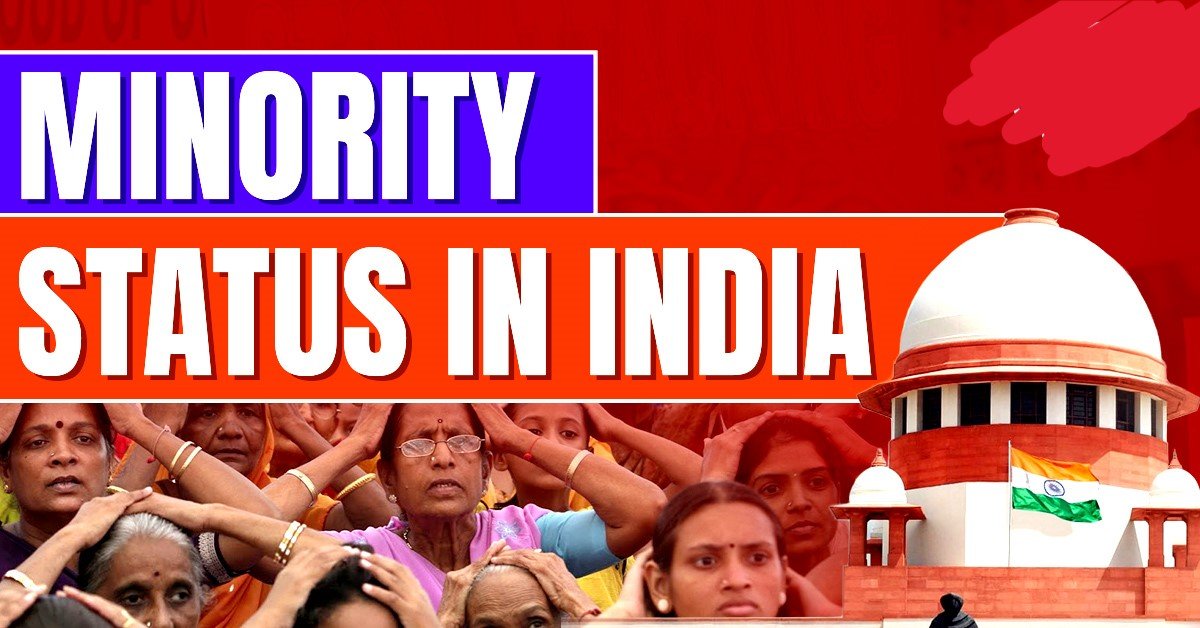
….Now that the census is about to begin, consideration should also be given to who constitutes a true minority in India. Because the tragic consequences of communalism and appeasement were seen in the partition of the motherland. Article 30 of the Constitution does use the word “minority,” but it does not define it. The central government has the authority to grant minority status under the Minority Commission Act, 1992. Currently, six communities—Muslims, Christians, Sikhs, Buddhists, Jains, and Parsis—have been granted minority status. Jews are not among these. Thus, the criteria for granting minority status are also unclear.
Minority communities are provided with a variety of benefits, including religious, educational, cultural, and economic benefits. Minority educational institutions are not governed by the Right to Education Act or reservation rules. There are several states where certain communities, despite being in majority at the state level, benefit from minority programs. If benefits go to socially or regionally stronger communities instead of reaching the truly disadvantaged, this impacts opportunities for other needy communities. Furthermore, it places additional financial pressure on state governments and reinforces the politics of minorityism.
According to the 2011 census, the population of people belonging to different religions in the country was as follows: Hindus 79.8 percent, Muslims 14.2 percent, Christians 2.3 percent, Sikhs 1.7 percent, Buddhists 0.7 percent, Jains 0.4 percent, and Parsis 0.006 percent. In a democracy, population strength can and does influence government policies. Muslims, by virtue of their numbers, are a powerful and influential community. They are capable of forcing the government to yield, as we have seen in the Shah Bano case. Currently, minority status is determined at the national level.
The result is that even in states where Muslims are in majority, such as Lakshadweep (96.58%) and Jammu and Kashmir (68.31%), they are granted minority status. Besides these, there are six states where the Muslim population is higher than the national average: Assam (34.22%), Bengal (27.01%), Kerala (26.56%), Uttar Pradesh (19.26%), Bihar (16.9%), and Jharkhand (14.53%). Should Muslims be granted minority status even in states with large populations?
If we talk about districts, there are 11 districts in Bihar where the Muslim population is higher than the national average. Kishanganj has 67.98 percent, Katihar 44.47 percent, Araria 42.95 percent, and Purnia 38.46 percent. Uttar Pradesh has 15 districts where the Muslim population is higher than the national average. Moradabad and Rampur have 50.80 percent and 50.57 percent, respectively. In districts like Bijnor, Saharanpur, Muzaffarnagar, Amroha (Jyotiba Phule Nagar), Balrampur, Bareilly, Meerut, and Bahraich, their population is more than 30 percent. If we talk about Bengal, there are 13 districts where the Muslim population is higher than the national average.
They are in majority in Murshidabad and Malda. Their population here is 66.27 and 51.27 percent respectively. The situation is similar in Bihar, Uttar Pradesh and Bengal in other states of the country as well. In six districts of Jharkhand, their population is more than the national average. In Assam, they are in majority in 11 districts. Should Muslims be given minority status even in densely populated districts? If we look at the Christian population, their population is in majority in three states and densely populated in five other states. There are a total of 14 such states where their population is more than the national average.
When a state’s minority population feels that certain communities, despite being in majority, are receiving special privileges, it creates social discontent and a sense of inequality. The purpose of minority status should be to provide security and opportunity, not permanent privilege. If the perception is created that benefits are being granted based on religious identity, rather than actual backwardness, it undermines social harmony and the spirit of equal citizenship. It is essential to continuously evaluate minority welfare policies. Schemes should be based on socio-economic backwardness rather than religion. India’s unity lies in its diversity, but justice, balance, and transparency are essential in policymaking.
Along with minority protection, it is also essential that government resources be used for genuine minority communities. Only a balanced approach can strengthen fiscal discipline, social harmony, and national unity. Determination of minority communities should be done at the state level, if not at the district level. If it has to be done at the national level, then only those communities with a population of two percent or less should be granted minority status.