Thackeray’s last bastion cracks, now a battle to maintain political relevance
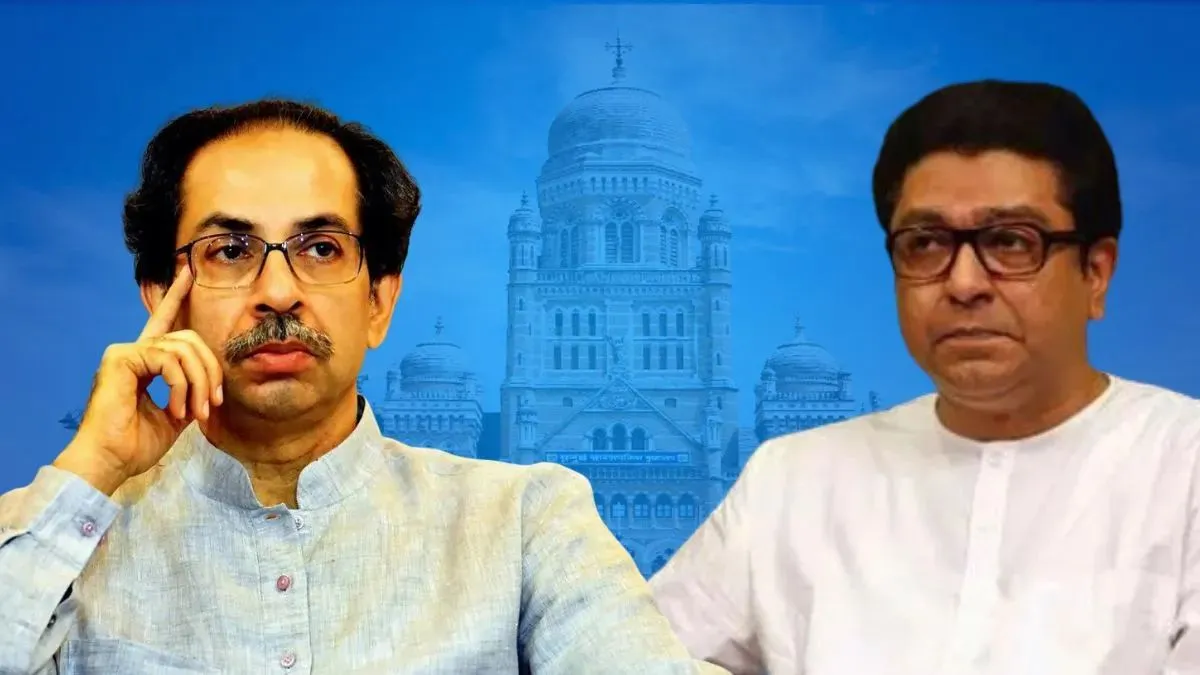
The BMC elections became the biggest urban drama in Indian politics, with the Thackeray family’s legacy at stake. The Shiv Sena split and the Uddhav Thackeray-Raj Thackeray alliance made national headlines. The election results were a major blow to the Thackeray brand, raising questions about his political relevance. His emotional appeal has weakened in the face of changing demographics and a development-oriented electorate, forcing him to reinvent himself for a comeback.
- The BMC elections proved to be a fight for survival for the Thackeray family.
- Losing the bow and arrow symbol and ideological weakness led to the defeat.
- Changing demographics and development-oriented voters became the deciding factors.
//… If the entire nation is watching a municipal election, its significance can easily be understood. The Brihanmumbai Municipal Corporation (BMC) election was such a case. This election became the biggest urban political drama in Indian politics. A drama in which power, legacy, identity, and future were all at stake. With an annual budget of over ₹75,000 crore, the BMC is not only the richest municipal body in India, but also in Asia.
This is the institution responsible not only for improving Mumbai’s image but also for grooming political aspirants. This is why its elections are a highly anticipated event, but the split of the Shiv Sena, the long-time power-grabber in the metropolis, the structural changes in Maharashtra’s political landscape, and the reunion of Uddhav Thackeray and Raj Thackeray after twenty years have made this election a topic of national attention.
Mumbai, through the BMC, served as Balasaheb Thackeray’s political laboratory for decades. This was the platform where Marathi Manus politics took shape. Hindutva gained an urban edge, and anti-Congressism became a permanent political issue. Therefore, the results of this election were a message of a revolutionary mandate. The implications of this message also pertain to the Thackeray family’s legacy. For Uddhav Thackeray, this election was a fight for political survival. Not just to win the BMC, but to maintain his relevance.
For Raj Thackeray and his Maharashtra Navnirman Sena, this was a test of whether they still held any relevance in Mumbai politics. Above all, another question lingered: had Eknath Shinde’s Shiv Sena truly become the “real Shiv Sena”? The voters’ verdict on these questions was clear, and it proved to be the biggest blow to the Thackeray brand yet. The
reasons for the Thackeray brothers’ defeat were both structural and symbolic.
For example, losing the “bow and arrow” symbol, which for decades symbolized Marathi identity, aggressive urban politics, and Balasaheb Thackeray’s fearless style in Mumbai. Contesting elections without it, Uddhav Thackeray’s Shiv Sena was constantly issuing clarifications, reinventing itself, and asserting its legitimacy. But in electoral politics, this is a sign of weakness, not strength. Balasaheb Thackeray’s politics was primarily based on Marathi pride, aggressive Hindutva, and anti-Congressism. By compromising on all three of these aspects, Uddhav Thackeray’s Shiv Sena appeared ideologically weak.
The Thackeray faction’s image of being “anti-development” also deepened in the elections. Despite controlling the BMC for nearly 25 years, from 1997 to 2022, the Thackeray camp lacked a concrete development model that it could confidently present to voters. In a city like Mumbai, where the Metro, Coastal Road, Trans-Harbour Link, and redevelopment projects have redefined urban life, mere emotional appeals were no longer sufficient. Voters, whether Marathi or non-Marathi, were asking, “What do you have to show after so many years of power?”
The Marathi Manus vote bank is now divided between Uddhav Thackeray, Eknath Shinde, the BJP, and Raj Thackeray. The city of Mumbai now demands employment, housing, the environment, and quality of life. Language and identity politics alone will not suffice. A large number of non-Marathi voters chose the option that promised stability, resources, and better coordination between the central and state governments. The allure of a “triple engine government,” i.e., a single party ruling at the center, state, and BMC, also proved decisive in Mumbai.
The timing also severely damaged the Thackeray brothers. Only about six months before the elections did they appear on a platform for the first time. Joint rallies were also held. This alliance seemed more like a temporary compromise and showed no signs of long-term cooperation. The city’s changing demographics have also altered the political landscape. Today, a large section of the population, whether Marathi or non-Marathi, understands Balasaheb’s politics from past examples, not from experience.
Their political consciousness was shaped by the development, aspirations, and nationalist discourse of the “Modi model.” The Thackeray brothers lacked a concrete vision of the future for this new, aspiring electorate. The role of Muslim voters cannot be overlooked. While Muslim voters rallied behind the Thackeray faction in previous Lok Sabha and Assembly elections, they did not do so in the BMC elections. In civic elections, practicality matters more than ideology, and here too, Thackeray faltered.
The BMC has long been the source of Shiv Sena’s power and the hub of the party’s financial resources, organizational control, and political influence. Balasaheb Thackeray understood this well, and Uddhav Thackeray inherited it. Now that even the BMC has slipped away, the question naturally arises: will the Thackeray brand of politics survive without it? Can political relevance remain in a city like Mumbai solely based on name and nostalgia?
However, it’s too early to make any pronouncements in politics, especially considering the Thackeray family has made comebacks in the past. Mumbai has handed them a harsh verdict, sending a message: change, reinvent yourself, or be consigned to history. The remnants of the party that rose from the streets of Dadar to rule the country’s financial capital will soon have to find answers to these questions.