When will the freebies be reined in?
When will the freebies be reined in? The Supreme Court will hear the case.
Such schemes, in the name of public welfare, are contrary to free and fair elections, with the sole purpose of luring people to vote. The Supreme Court must also ensure that political parties consider the economic situation of a particular state when making populist announcements under the guise of public welfare.
- The Supreme Court will hear a PIL on populist announcements.
- Free schemes increase the burden on the government treasury.
- Real public welfare should promote self-reliance.
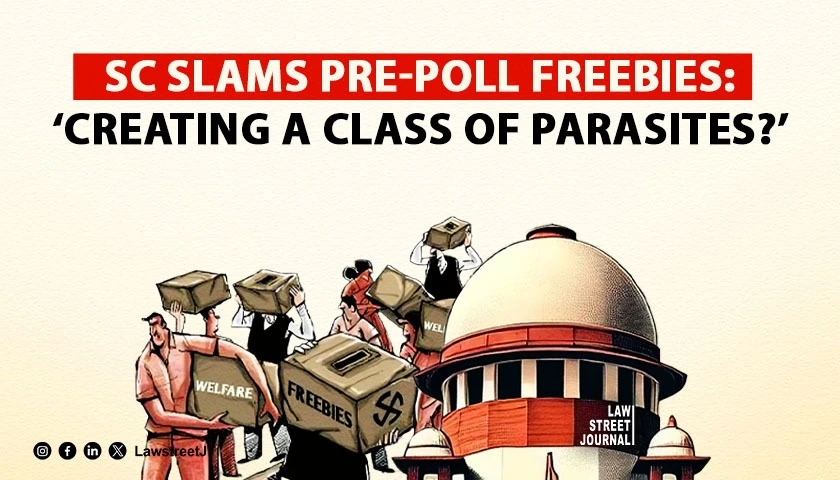
It is welcome that the Supreme Court, recognizing the importance of the PIL, agreed to hear it, demanding that political parties take cognizance of the populist announcements made in light of the country’s growing debt. Although this issue has been brought before the Supreme Court before, and it has issued some directives to the Election Commission in this regard, they have not worked.
It’s impossible to ignore that, as elections approach, political parties begin making announcements of freebies and concessions in the name of public welfare to woo the public. Some parties have even begun announcing outright monetary donations. As such announcements have become instrumental in winning elections, their frequency is increasing. What once existed in Tamil Nadu is now being implemented across the rest of the country.
The situation is such that the BJP, which used to call populist schemes freebies, has also begun announcing such schemes. Freebie schemes are launched with the promise of benefiting the poor and underprivileged and fostering their economic upliftment, but it is becoming clear that such schemes not only burden the government treasury but also make the poor dependent on the government.
Undoubtedly, in a country with a poor population like India, governments must care for the poor and disadvantaged and make special efforts to improve their economic well-being. But this does not mean that economic rules should be ignored in the name of public welfare. This is precisely what is happening at present.
To curb populist announcements, the first requirement is to define what real public welfare is and how governments should achieve it. Any scheme that does not make people self-reliant, that is, does not inspire them to stand on their own feet, cannot be called public welfare.
Such schemes, in the name of public welfare, are contrary to free and fair elections, with the sole purpose of luring people to vote. The Supreme Court must also ensure that political parties consider the economic situation of a particular state when making populist announcements under the guise of public welfare.
They should not be allowed to launch schemes that could destabilize the state’s finances and leave it short of funds for even basic development work. It should be noted that many states are struggling to pay their employees on time.