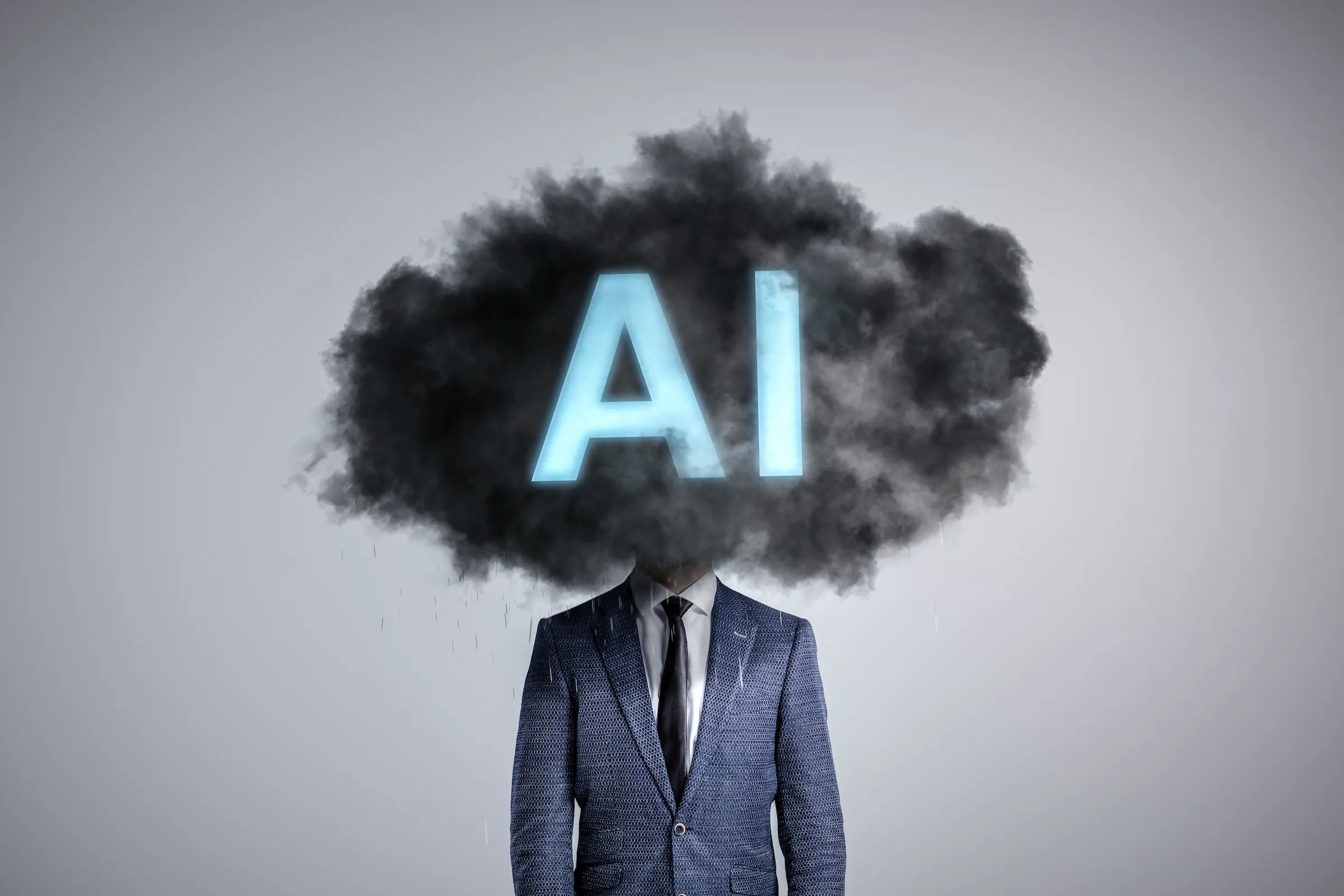
Beware the dangers of AI
Beware the dangers of AI ?
We must understand that AI is not a competitive advantage, but a shared responsibility. The Indian idea of Vasudhaiva Kutumbakam has now moved beyond philosophy to become a part of survival strategy. Therefore, through its civilizational depth and credibility, India can play a significant role in shaping global AI norms for new governance structures.
- AI labor substitution, increasing inequality and centralization of resources.
- Fake information, geopolitical imbalances and a threat to learning.
- With the right policies, AI will enhance human capabilities and become a global norm.
……Given the rapid changes the world has seen over the past decade, it’s essential to assess the potential changes in the next ten to twenty years. For most of human history, scarcity has shaped the fabric of civilizations. Whether it’s the scarcity of food, land, labor, capital, or, over time, knowledge. The emergence of our economic theories and the development of political institutions have also centered on scarcity management.
Machine intelligence, or AI, has the potential to overturn this traditional landscape. If the twentieth century was about overcoming scarcity, the coming decade could be about balancing surplus with the challenge of achieving it. In this new landscape, our institutions are lagging behind the rapid advancement of technology. Therefore, it becomes essential to consider policy measures that can effectively address the disruptions posed by AI.
Traditional economics considers the four primary factors of production: labor, capital, land, and technology. Technology has always supported labor. Each technological transition has increased productivity and wages, while also expanding demand and creating new jobs. While this has caused some inconvenience, it has been temporary, not permanent. However, AI may reverse this trend. For the first time, technology appears to be directly replacing labor.
AI is dominating not only physical labor, but also intellectual, professional, and creative work. While productivity is increasing with AI, job creation is not commensurate. This will not pave the way for shared prosperity. This means it will increase inequality. AI is also different in nature and form from previous technologies. Once a prototype is developed, it is capable of reducing marginal costs to zero. This naturally creates monopolies. This is reflected in the mastery of specific prototypes by select companies in a few countries.
Many analysts fear that AI could cause widespread disruption. It is even capable of upending the balance of human society. Today, productivity and capabilities are constantly increasing. Goods are becoming cheaper. The quality of services has improved. The quality of material life has improved. Countries that have successfully adopted AI are experiencing rapid economic growth. Healthcare services have improved significantly. Life expectancy has increased, and the burden of disease is decreasing. The demographic dividend loses its meaning when life spans expand and the scope of work shrinks.
In this scenario, nations and societies dependent on remittances face challenges. The very idea of employment as a foundation for dignity and livelihood becomes increasingly threatened. Concentration of resources is another problem arising from AI. Effective policy measures must be found to redistribute resources. Without this, widespread economic repercussions could be encountered.
AI also threatens our ability to learn and understand. When machines become decision-making tools, people are likely to lose their inclination to learn. Historian David Rochlin has also pointed out that excessive reliance on autopilot mode leaves pilots helpless in times of crisis. The biggest danger isn’t that machines act like humans, but rather that humans themselves behave like machines.
The flood of fake information and questionable content created by AI is also exacerbating the crisis. This has undermined trust. A web of truth and falsehood is being woven that confuses people. Those who have mastered AI are on their way to becoming even more powerful. It is fueling the rise of the new rich.
AI is also increasing inequality in a geopolitical context, as countries lacking modern technology will automatically fall behind. A country’s sovereignty could be compromised by algorithms operating in another country. Despite this, if the right policy measures are implemented, AI can also bring about significant positive change. To achieve this, AI must be viewed as a civilizational force rather than a technological tool. AI should be used to enhance human capabilities rather than to replace them.
AI is capable of solving many problems that require extraordinary human effort, such as opening new frontiers in outer space, unraveling the mysteries of the deep ocean or the Earth’s complex layers. It could make human life possible on many planets. By better understanding nature, we can learn the secrets of its efficient management. It will also be useful for verifying facts and information.
There is no doubt that no matter how many capabilities AI acquires, it cannot imbue it with human emotions like love, care, empathy, and moral obligation. AI may improve patient treatment, but love, affection, and care are only possible from loved ones. We must understand that AI is not a competitive advantage, but a shared responsibility. The Indian idea of Vasudhaiva Kutumbakam has now moved beyond philosophy to become a part of survival strategy. Thus, through its civilizational depth and credibility, India can play a significant role in shaping global AI norms for new governance structures.